The smart #1 was one of the first major products of the brand’s new era under the Geely and Mercedes-Benz partnership. Mercedes-Benz was mainly responsible for the styling, while the technical base came from the Chinese group. The original model arrived with a 400 V architecture and more conventional fast-charging capability, enough for a 10% to 80% charge in around half an hour. The updated version for China now introduces a much more ambitious step: an 800 V system and a battery capable of 6C charging.
The battery announced for this new version has a capacity of 61.52 kWh and can accept up to 370 kW of DC charging power. On paper, that allows the car to charge from 10% to 80% in 12 minutes, a highly competitive figure even compared with larger and more expensive EVs. The claimed range reaches 535 km under the CLTC cycle, although this Chinese test cycle is usually more optimistic than Europe’s WLTP standard, so it should not be compared directly with the current European smart #1 figures.
Another key upgrade is Geely’s new 16-in-1 integrated electric drive system. This unit combines the motor, power electronics, onboard charger, thermal management, vehicle control and other modules into a more compact package. According to Geely, peak efficiency reaches 93.8%, high-voltage wiring is reduced by 30% and the unit’s overall height is below 325 mm. In the updated smart #1, the rear motor will produce 245 kW, or 329 hp, a strong output for a compact crossover measuring 4.27 metres long.
This level of integration has clear advantages: lower weight, fewer components, reduced industrial complexity and better use of space. It can also reduce energy losses by shortening wiring and improving coordination between propulsion, charging and thermal-management systems. However, as with other highly integrated systems, repairability remains a question. If an internal module fails, replacement could be more complex and expensive than in architectures where components such as the onboard charger, DC-DC converter or high-voltage distribution unit are more separate.
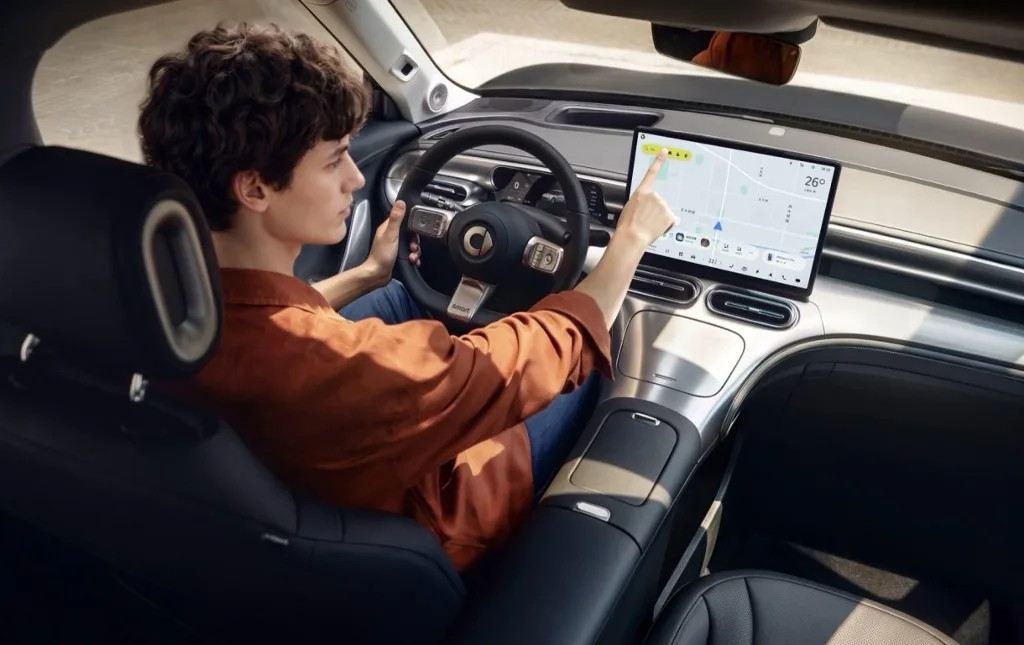
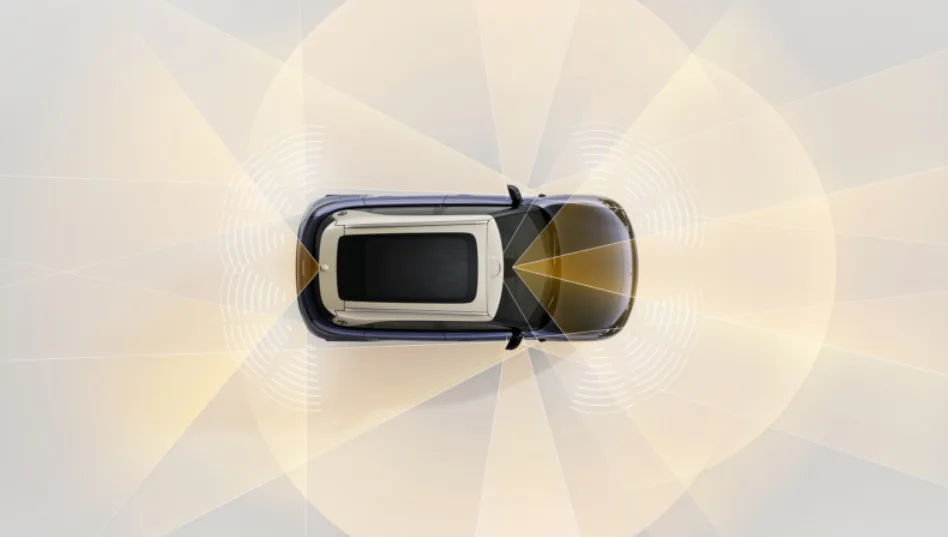
The upgrade is not limited to charging. The updated smart #1 will also add a LiDAR-based G-ASD D-Pilot H5 driver-assistance system, using 31 sensors and a Nvidia Orin Y chip with 200 TOPS of computing power. With this hardware, the model will support assisted navigation functions on highways and urban roads in China. The infotainment system will also be upgraded with a 4 nm chip and a 15.4-inch central display, reinforcing the model’s more technology-focused positioning.
The timing is important for smart in China. According to the figures cited, the brand delivered 5,350 units of the smart #1 in China between January and June 2026, down 47.6% year on year. The technical update appears designed to regain momentum against local rivals already offering 800 V platforms, ultra-fast charging and advanced driver-assistance systems. In China, where the pace of EV development is much faster than in Europe, an electric car can start to feel outdated in just two or three years.
For Europe, the big question is whether this update will arrive and when. The current European smart #1 remains a competitive electric crossover in terms of size, design and premium urban positioning, but an 800 V version capable of charging in 12 minutes would significantly change its market position. For now, smart has not confirmed an official launch date for Europe, although all rumours point to the first half of 2027. It would also help smart compete more directly with the next wave of Chinese and European EVs offering faster charging and increasingly aggressive prices. For now, the update is aimed at China, but it clearly shows where Geely is moving: faster platforms, deeper integration and a pace of development that is putting more pressure on the European market.