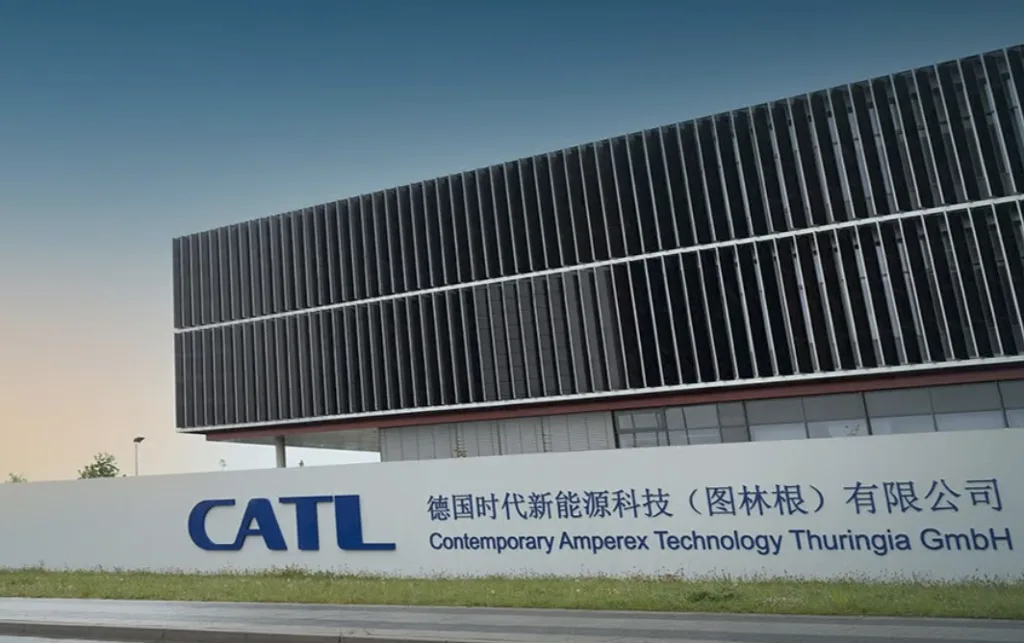
CATL wants 2026 to be the year sodium-ion batteries move from technical promise to commercial product. Its new cell family is called Naxtra, the brand name CATL uses for its next-generation sodium-ion batteries. The first announced application is the Changan Nevo A06, an electric passenger car with a 45 kWh battery, energy density of up to 175 Wh/kg and more than 400 km of CLTC range. It is not designed for large sedans with record-breaking range, but it could help unlock more affordable electric cars, particularly in urban and compact segments.
The main advantage of sodium is that it relies on raw materials that are more abundant and less exposed to lithium price volatility. It also offers especially interesting performance in extreme cold, one of the usual weaknesses of conventional batteries. CATL says its battery can retain more than 90% of its capacity at -40°C and continue delivering power at even lower temperatures. For markets with harsh winters, professional fleets or high-utilisation vehicles, that resilience may be more valuable than a few additional kilometres of range.
But the central question is not whether the technology works. It is whether it can be manufactured at truly competitive cost and scale. Wu Zuyu, chairman of HiTHIUM and a former CATL engineer, has urged caution by saying sodium-ion batteries may still need around five years to become economically competitive at large scale. His point matters because cost does not depend only on the price of sodium. It also depends on material maturity, factory yields, hard-carbon anode supply, component production and the actual volume of confirmed orders.
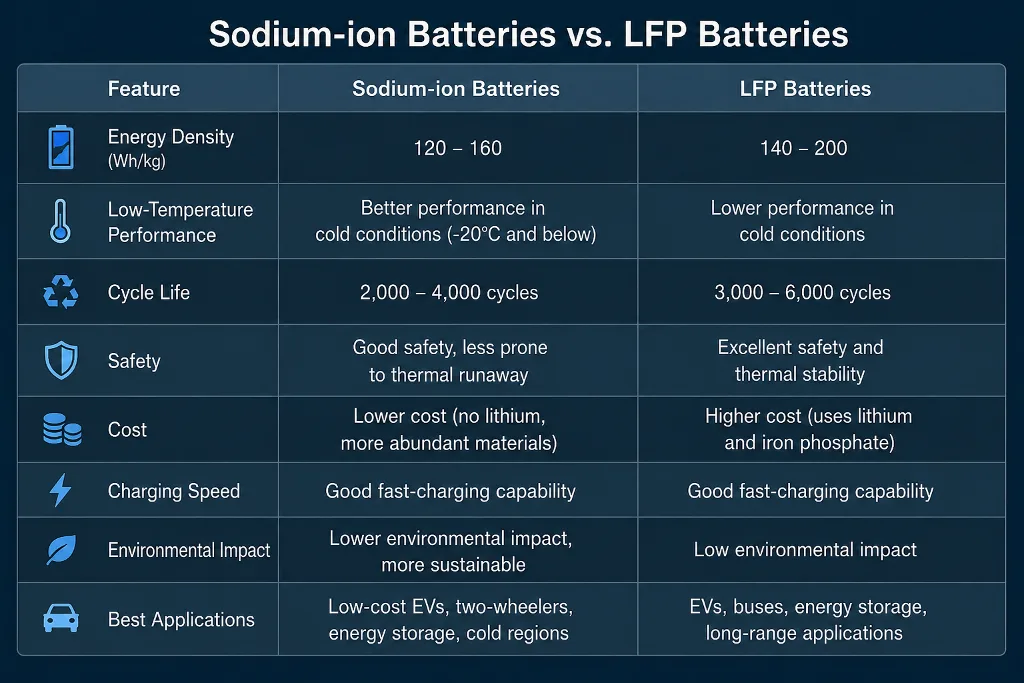
The comparison with LFP batteries will be decisive. Sodium-ion cells promise lower costs, stronger safety and less reliance on critical minerals, but they are entering a market where LFP batteries are already cheap, widely industrialised and still improving in energy density, charging performance and lifespan. That is why sodium-ion batteries are unlikely to replace lithium cells across every category at first. Their initial role will be in segments where their advantages compensate for lower energy density: entry-level cars, delivery vehicles, cold-climate models and stationary storage.
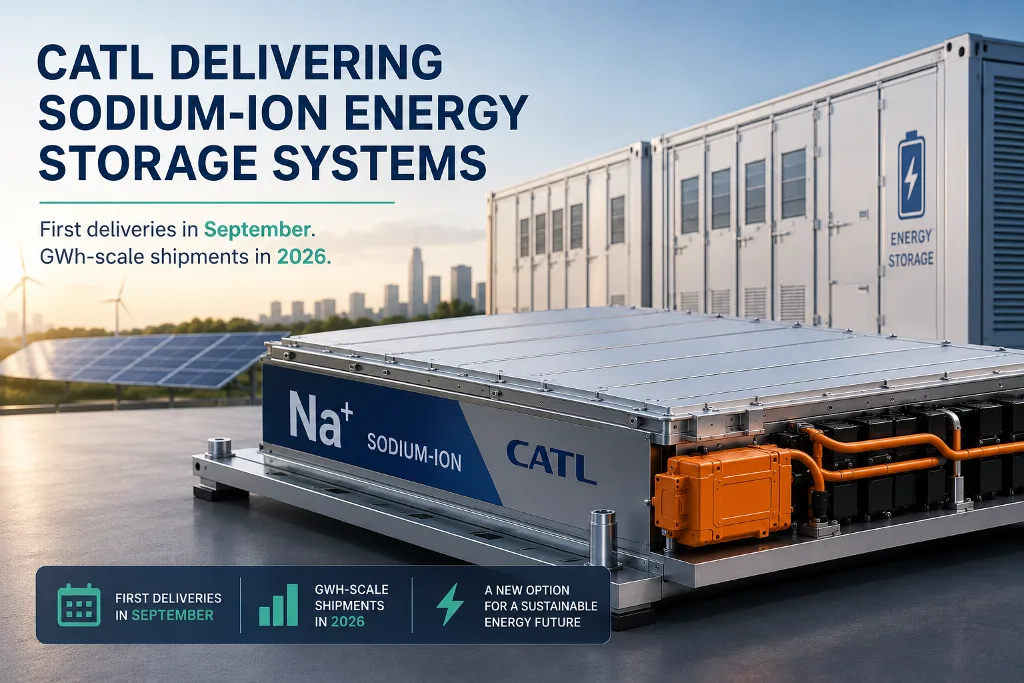
Energy storage may be the most promising first market. CATL has signed a three-year agreement to supply 60 GWh of sodium-ion batteries to HyperStrong for stationary storage systems. In a solar plant, wind project or grid backup facility, weight and volume matter far less than in a passenger car. Cost per cycle, safety, service life and the ability to operate through thousands of charging cycles are the more important metrics. That gives sodium-ion batteries a chance to build industrial scale in stationary applications before becoming common in mainstream vehicles.
CATL has also said it expects between 10,000 and 20,000 electric vehicles to use its sodium-ion batteries during 2026. That figure is significant because it shows the technology has moved beyond experimentation, but it remains small compared with the millions of electric vehicles produced in China every year. The transition toward true mass production will depend on real-world performance, sustained cost advantages over LFP chemistry and enough volume to justify further investment in factories and supply chains.
Sodium-ion batteries do not appear ready to replace lithium overnight. They are more likely to coexist with it. CATL describes the future as a dual-chemistry era, with each battery technology aimed at different applications. Lithium will remain dominant where range and energy density matter most, while sodium could gain ground where cost, safety, cold-weather performance and raw-material availability matter more. The key question is no longer whether sodium-ion batteries can work, because they are already beginning to. It is when they can compete without relying on future promises.