
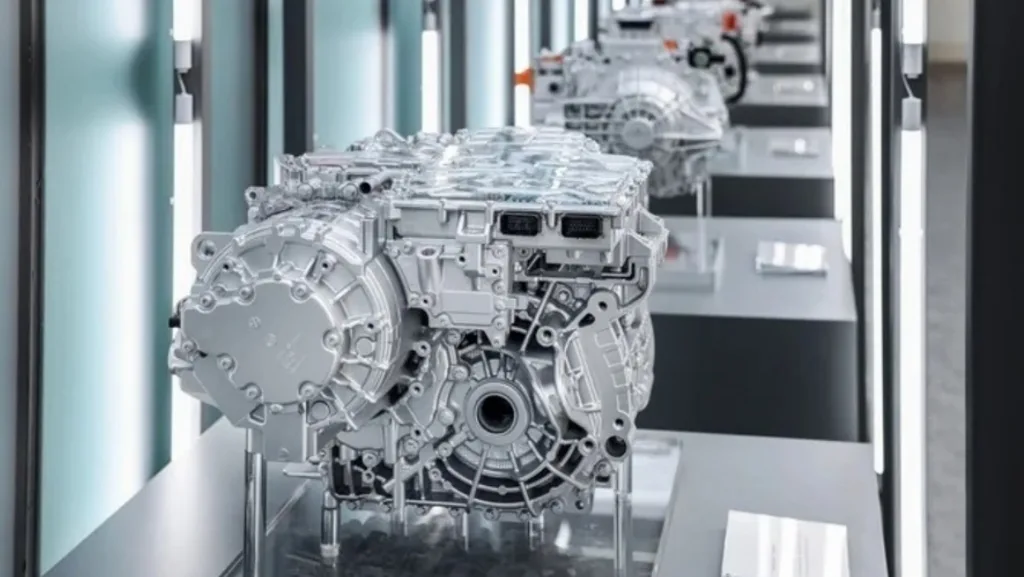
Geely Galaxy has officially presented the Thunder 16-in-1 electric drive system, a new propulsion unit developed by InfiMotion, a subsidiary of Geely Holding Group. According to the company, it achieves an overall efficiency of 93.8%, a figure Geely describes as a production-level record. The idea is straightforward: reduce the number of separate components, cables and control units to create a more compact, lighter and more efficient electric drive.
The system integrates 12 hardware functions: electric motor, motor controller, reducer, DC-DC converter, onboard charger, power distribution unit, high-voltage battery management, low-voltage battery management, vehicle control unit, thermal management system, active pre-charge control and power domain gateway. It also adds four software capabilities: intelligent energy management, intelligent charging management, intelligent motion control and intelligent health management.
The result is the removal of more than 180 redundant components, a power density of 11.8 kW/kg and a total weight of 75 kg, around 15% less than some mainstream reference systems. Geely also says high-voltage wiring is reduced by 30% and low-voltage wiring by 15%. In an electric car, less wiring does not only mean lower weight and manufacturing cost. It can also reduce electrical losses and free up space for other parts of the vehicle.
The unit is less than 325 mm tall, allowing more compact packaging within the platform. According to Geely, this reduced volume can free up around 28 litres of additional usable space, for example in the boot, and make it easier to integrate new technologies such as steer-by-wire. This matters because EV efficiency is not only about battery chemistry. It is also about how the motor, electronics, cooling system and control architecture are packaged and managed.
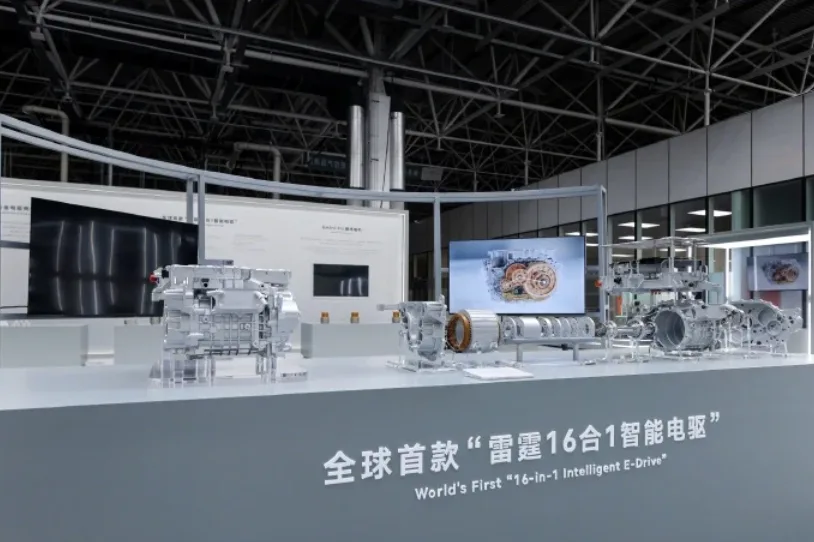
The system is designed for 800 V platforms and uses what Geely calls One-Chip technology, reducing control latency from around 40 milliseconds to as little as 2 milliseconds. In theory, this improves powertrain response, system coordination and energy management. Geely also refers to AI-based algorithms designed to optimise performance in cold weather and at high speed. At -18 ºC, the system can store thermal energy equivalent to around 7 kWh, reducing cabin-heating energy consumption by more than 40%.
Geely used the Galaxy TT to demonstrate the system’s potential. This electric sports sedan measures almost five metres long and will offer 245 kW, or 329 hp, and 425 kW, or 570 hp, powertrain versions. In testing cited by Geely, a vehicle equipped with the system achieved energy consumption of 8.2 kWh/100 km around Qinghai Lake, although this was a specific test condition rather than a homologated figure directly comparable with real-world driving. Under the CLTC cycle, Geely refers to consumption from 10.7 kWh/100 km.
However, the first car expected to reach the market with the Thunder 16-in-1 system will not be the Galaxy TT, but the updated Lynk & Co 02 in China, where it will be sold as the Lynk & Co 20. This electric fastback crossover will use the new drive unit on the rear axle, with a 245 kW motor and a claimed efficiency of 93%. It is also expected to feature an 800 V architecture and 6C fast-charging technology, although Lynk & Co has not yet released final battery, range or energy-consumption figures.
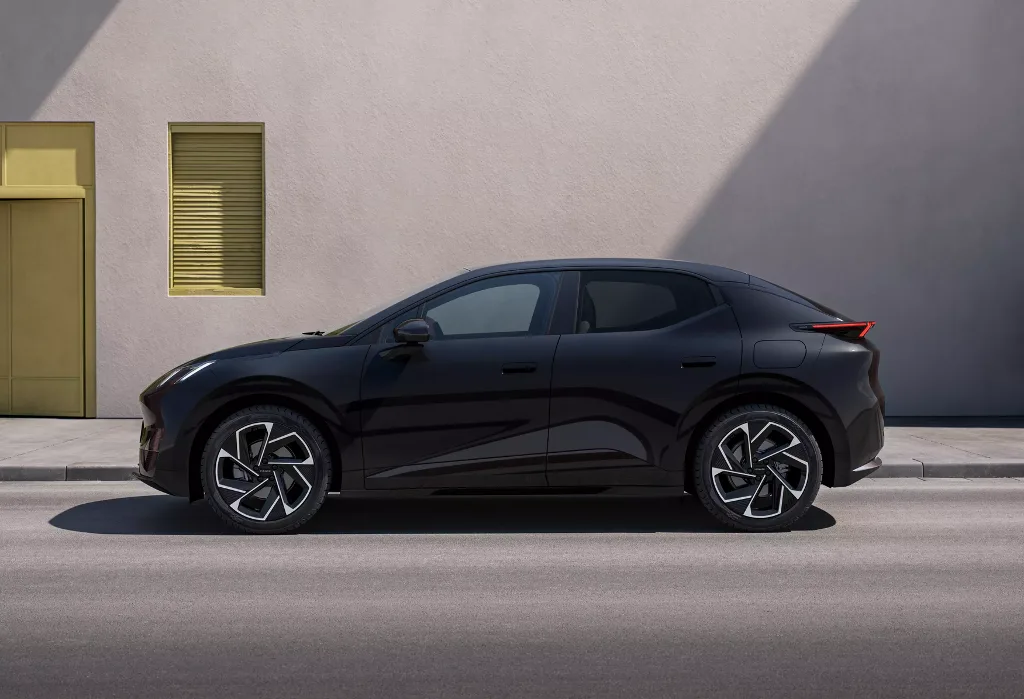
The updated Lynk & Co 02 will also receive exterior changes, including new bumpers and a sportier roof spoiler. It measures 4.50 metres long, 1.85 metres wide and 1.57 metres tall, with a 2.76-metre wheelbase. It is not a particularly large car, but the new electric drive system could help improve available space, performance and efficiency without requiring a major increase in battery size.
The less positive side is repairability. Integrating so many components into a single unit can reduce weight, manufacturing cost and energy losses, but it may also make repairs more expensive if a specific module fails. In many electric cars, parts such as the onboard charger, DC-DC converter and high-voltage distribution box are grouped separately because they do not all have the same lifespan or failure pattern. If everything is more tightly integrated, replacing one part can become more complex and costly.
The Thunder 16-in-1 system shows where China’s EV industry is heading: deeper integration, higher efficiency and increasing pressure on traditional carmakers. For Europe, the message is important. While many brands remain focused on batteries and platforms, Geely is also attacking the cost, weight and efficiency of the entire propulsion system. If this technology reaches global Lynk & Co, Zeekr or Geely models, it could become another competitive pressure point for European manufacturers.