Solid-state batteries are once again at the centre of the electric car technology debate, but the signals coming from China are not all pointing in the same direction. On one hand, Dongfeng says it will begin production and vehicle integration of its new solid-state batteries in the second half of 2026, while BYD aims to bring this technology to its electric cars in 2027. On the other hand, CATL is cooling expectations and placing true mass-market commercialisation beyond 2030.
The key issue is scale. Robin Zeng, chairman of CATL, places the threshold for large-scale commercial production at around one million vehicles, a volume that remains far out of reach for solid-state batteries today. According to the company, the technology is still at level 4 on a nine-level Technology Readiness Level scale, which means it remains in laboratory validation and engineering prototype phases. In other words, fitting an advanced battery to a limited series or a premium vehicle is one thing; producing it at scale for millions of cars is something very different.
The main technical problem remains the solid-solid interface. CATL says the process requires warm isostatic pressing at pressures of up to 6,000 atmospheres to bind the materials together, but different compaction densities can create structural misalignments, increase internal resistance and accelerate cell degradation. In other words, achieving a spectacular battery in a test is not enough: it must be possible to manufacture it in a stable, affordable and repeatable way across millions of units.
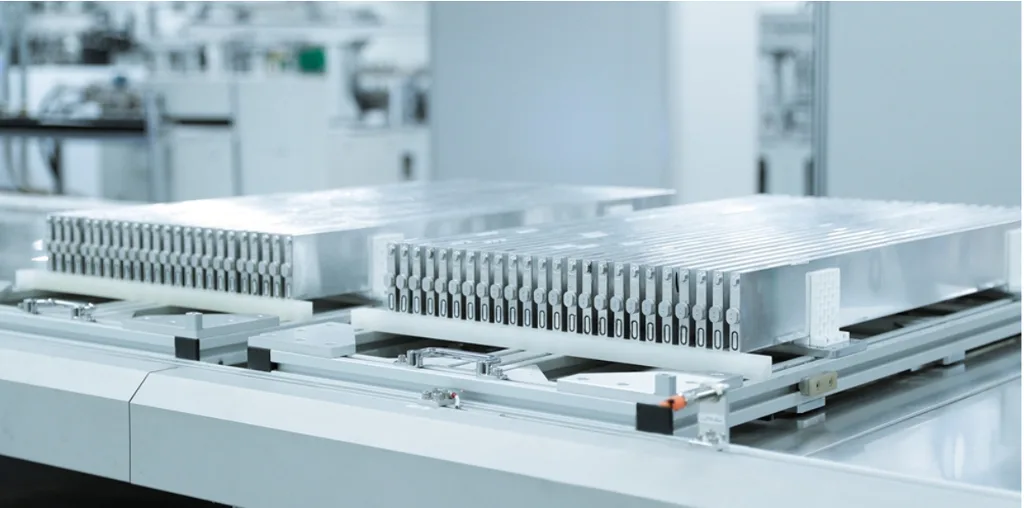
That is why the apparent contradictions between manufacturers may be more about scale than substance. Dongfeng or BYD may introduce advanced batteries in specific vehicles, probably high-end models, before 2030, while CATL may still be right in saying that mass adoption remains far away. In fact, Zeng himself suggests that the first commercial applications will be limited to premium vehicles priced above 250,000 yuan, around 36,900 dollars, where the initial cost is easier to absorb.
The most cautious reading is that solid-state batteries no longer look like a promise permanently five years away, but they are not an immediate revolution for every electric car either. First will come expensive models, limited series and hybrid or composite solutions; later, if the industry solves the problems of interface resistance, pressure, degradation and cost, mass adoption will follow. In other words, Dongfeng and BYD may be announcing the beginning of the road, while CATL is reminding everyone that the industrial finish line still looks closer to 2030 than to 2027.