

Modern cars already use accelerometers and impact sensors that can activate safety systems within milliseconds. The limitation is that these devices usually begin measuring the crash accurately once the impact has already started. Tesla aims to move earlier in the sequence by using its external cameras and Tesla Vision image processing to recognise vehicle trajectories, estimate when contact is likely to occur and assess the probable severity of a frontal collision.
According to the company, that analysis allows the restraint systems to begin preparing before physical sensors detect the deceleration caused by the crash. Tesla says the system can provide up to 70 milliseconds of additional lead time, which may sound insignificant but can matter in a severe collision. Airbags do not become fully inflated instantly. They need time to fill and reach the correct position before an occupant moves forward into them.
The feature does not completely replace conventional crash sensors. Accelerometers and impact sensors still form part of the final decision-making process that determines whether the airbags should deploy and how strongly the restraint systems should react. The difference is that the camera system can add an extra layer of information before the impact, allowing seatbelt pretensioners and other occupant-protection systems to begin preparing for a collision that appears unavoidable.
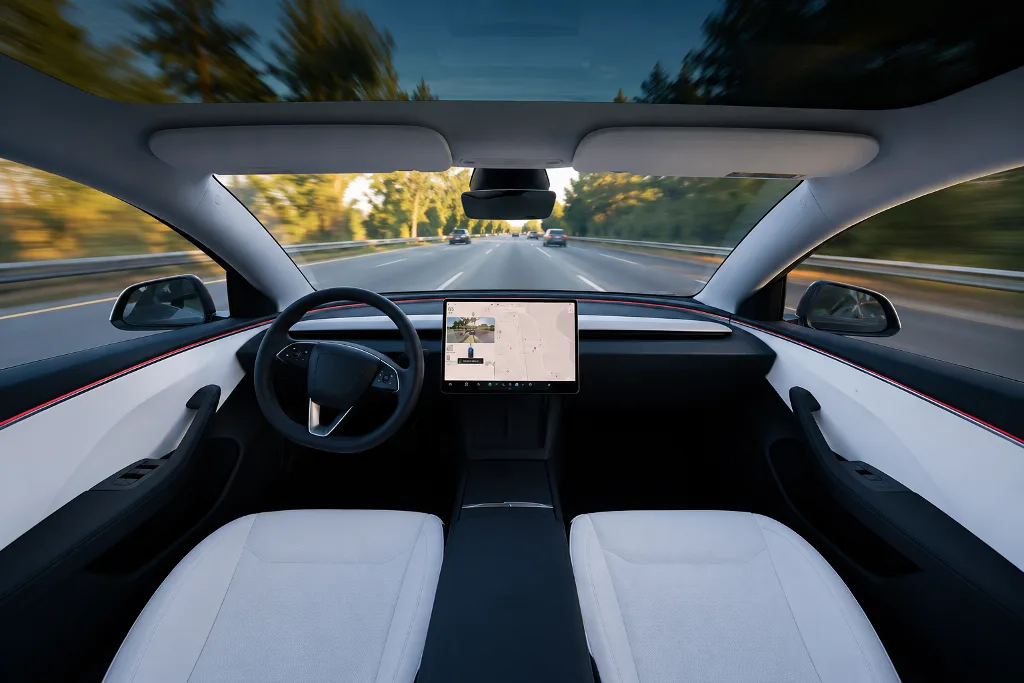
The update highlights one of the potential advantages of software-defined vehicles. The same camera network that Tesla uses for Autopilot, assisted-driving functions, environmental awareness and the replacement of some parking sensors can gain new safety functions without requiring physical changes to the vehicle. In this case, the improvement is delivered over the air and relies on integration between the cameras, onboard computing hardware and passive safety systems.
Tesla previously added a feature called Frontal Airbag System Enhancement as part of software update 2025.32.3, released in September 2025 for selected compatible vehicles. However, the company has not publicly specified which exact models, markets or hardware versions will receive the feature as the rollout continues. Update logs suggest that the function was distributed to selected vehicles, so owners should check the release notes for their individual car before assuming it is available.
The concept is especially interesting because it moves part of passive safety toward a predictive model. Traditionally, a vehicle reacts once a crash has already begun. With this system, the car attempts to interpret the moments before impact so that its protective systems are ready when they are actually needed. It does not prevent a collision and does not replace driver attention, but it shows how cameras and software can also become tools for reducing the consequences of a crash.