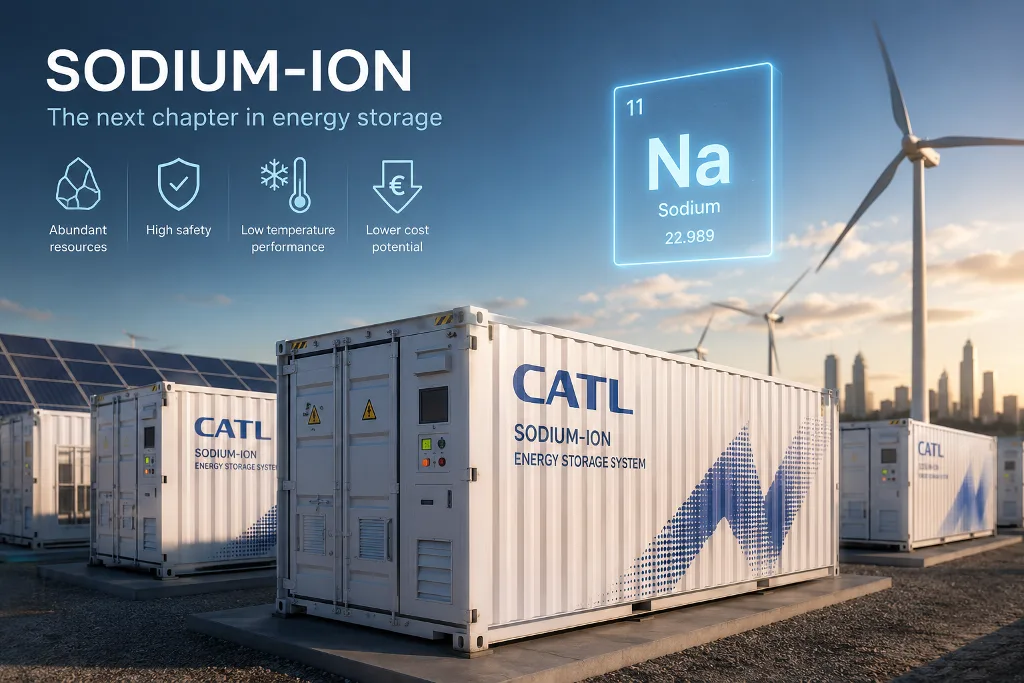
CATL is moving sodium-ion batteries closer to real-world deployment. The Chinese battery giant has confirmed that its first sodium-ion energy storage systems will reach customers in September, giving the technology one of its clearest commercial timelines so far. For a chemistry that has been researched for decades but long remained behind lithium-ion in performance and maturity, this is a meaningful step towards industrial scale.
The first major opportunity is likely to be stationary energy storage. In grid-scale battery systems, weight and volume are not as critical as they are in electric cars. Cost, safety, durability, raw material availability and low-temperature performance can matter much more. That makes sodium-ion particularly interesting for Europe, where solar and wind power are growing fast and affordable storage is becoming essential to balance renewable generation.
As we discussed in our previous article on CATL’s 2026 sodium-ion mass production plans, this chemistry is not expected to replace LFP or NMC batteries overnight. Its role is more targeted: applications where cost, material availability and safety are more important than achieving the highest possible energy density. That makes it relevant for energy storage, but also for entry-level EVs, urban cars, commercial vehicles, range-extended vehicles and hybrid configurations.
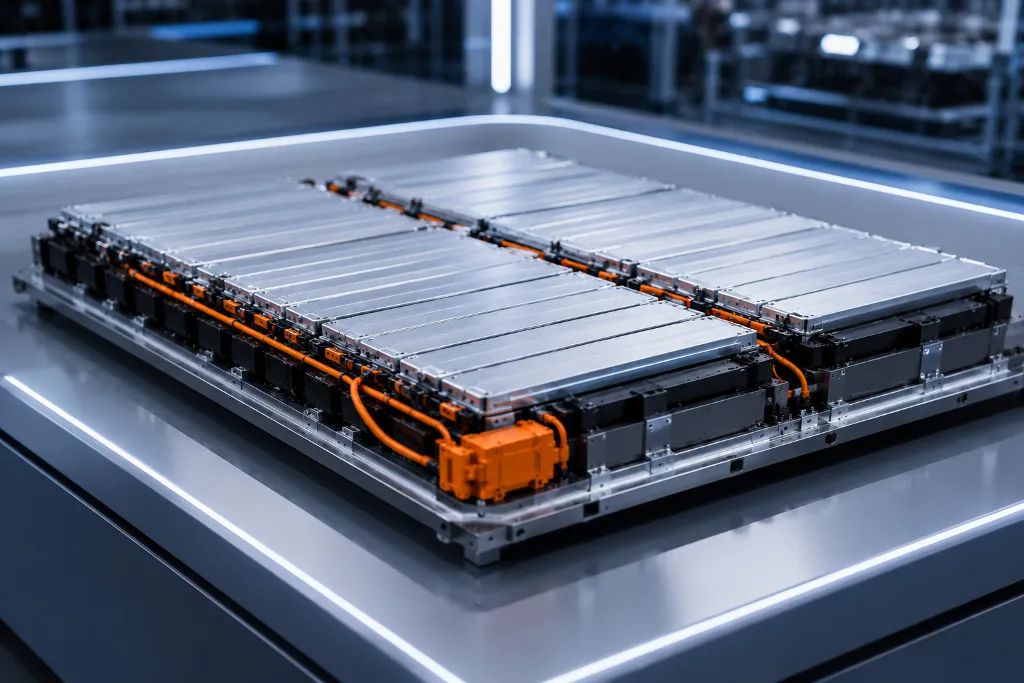
CATL says its sodium-ion battery technology can currently reach an energy density of up to 175 Wh/kg, which it describes as a benchmark for mass production. Combined with advanced Cell-to-Pack integration and an intelligent battery management system, the company says the chemistry can support pure-electric driving ranges above 400 km. As the sodium-ion supply chain develops further, CATL expects future ranges of 500 to 600 km for pure EVs and 300 to 400 km for range-extended or hybrid configurations.
Those numbers should still be treated with caution in Europe, especially when range claims are based on Chinese test cycles, which tend to be more optimistic than WLTP. Even so, the direction is important. Sodium-ion is no longer being positioned only as a low-cost chemistry for stationary storage. It is increasingly being presented as a practical option for a large part of the electrified vehicle market. According to CATL, the technology could cover more than 50% of the range requirements in the new energy vehicle sector.
Falling material costs are another reason why sodium-ion is gaining momentum. Hard-carbon anodes, one of the key components in sodium-ion batteries, are entering industrial-scale production. Industry estimates suggest that hard-carbon costs could fall from 60,000 to 70,000 yuan per tonne in 2024 to 35,000 to 40,000 yuan in 2026, with longer-term targets below 25,000 yuan per tonne. If that trend continues, sodium-ion could follow a similar path to LFP batteries: greater scale, lower costs and growing adoption in price-sensitive applications.
Commercial demand is already starting to appear. CATL and HyperStrong have signed a three-year agreement covering 60 GWh of sodium-ion batteries for energy storage, one of the largest publicly disclosed commitments for the technology so far. HyperStrong also plans to develop lithium-sodium hybrid demonstration power stations during 2026, showing how both chemistries could be combined depending on the specific use case.
For Europe, the timing matters. Sodium-ion batteries could first become important in renewable energy storage before finding a broader role in certain electric vehicle segments. They are unlikely to be the single battery solution for every EV, but they could help reduce lithium dependency, lower storage costs and make simpler, more affordable electric cars more viable. If CATL meets its schedule, September will mark an important step in bringing sodium-ion batteries into the commercial energy market.
Source: battery-tech