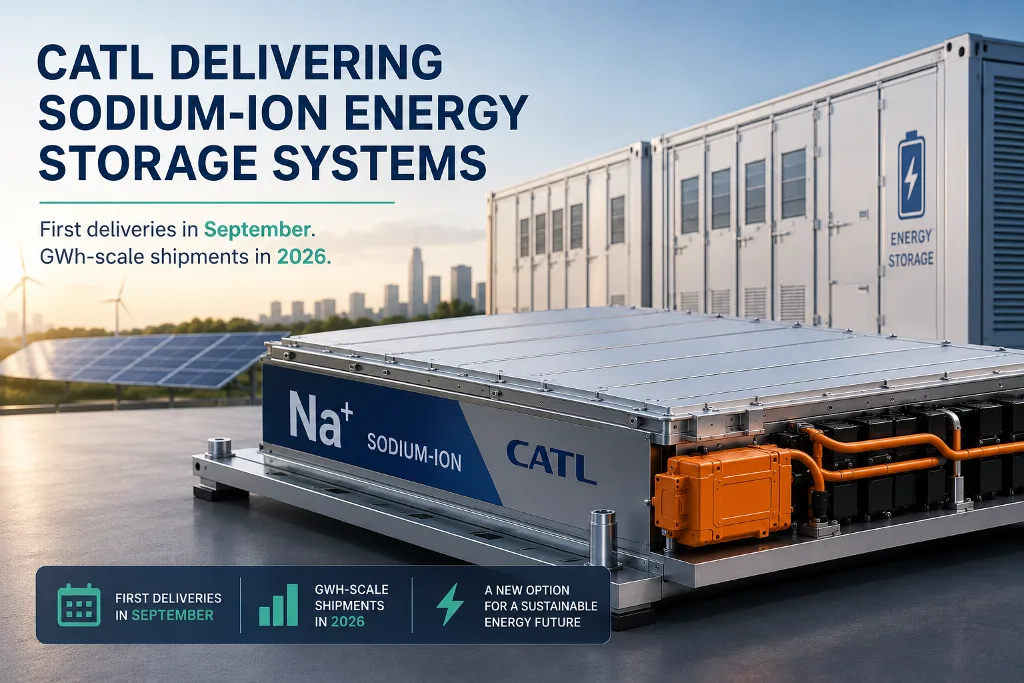
CATL is preparing to begin mass production of its sodium-ion batteries in 2026, a technology that could open a new chapter for electric vehicles thanks to the use of more abundant raw materials and a lower exposure to lithium price volatility. According to Wu Kai, CATL’s chief scientist, the main industrial bottlenecks have now been resolved, paving the way for this chemistry to be used in electric cars, commercial vehicles, battery-swapping networks and energy storage systems.
The big promise of sodium-ion technology lies in cost and material availability. Sodium batteries are not expected to immediately replace today’s LFP or NMC batteries across every segment, but they could become a highly competitive alternative for entry-level EVs, urban models, commercial vehicles and stationary storage. CATL is also working on future versions capable of reaching up to 600 km of range on the CLTC cycle, a figure that should be interpreted with caution in Europe, as the Chinese test cycle is usually more optimistic than WLTP.
For Europe, the arrival of sodium-ion batteries could be especially relevant if it helps bring down the price of small and compact electric cars, precisely where the market still needs a better balance between cost, range and real-world usability. Not every buyer needs huge battery packs or extreme performance: many are looking for a sensible, reliable and more affordable electric car. If CATL manages to scale this technology with competitive costs, solid safety and good durability, sodium could become one of the keys to making electric mobility more accessible in the coming years.