
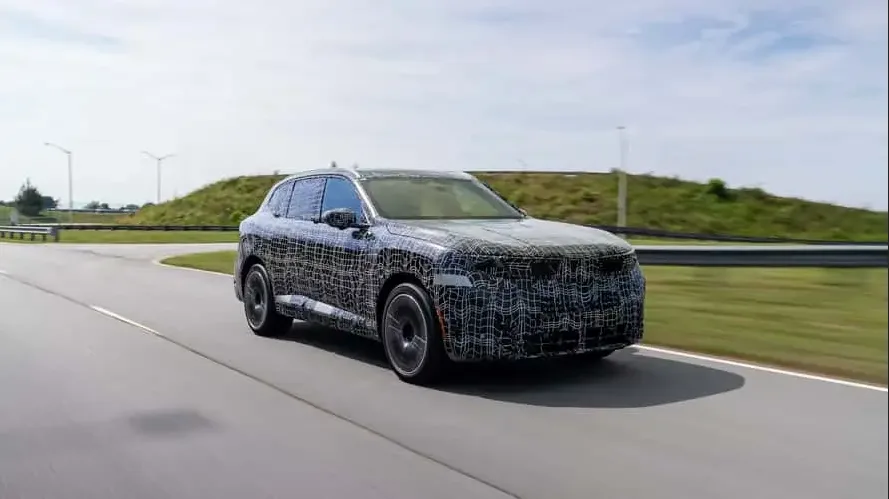
BMW does not seem interested in making a quiet entrance with the electric X5. The upcoming iX5 xDrive 60 will use the largest battery ever fitted to an electric BMW: 144 kWh of usable capacity for the U.S. market. Official range figures have not been confirmed yet, but with a pack of that size, the iX5 looks set to become one of the longest-range electric SUVs on sale. Put simply, BMW appears to have looked at the range anxiety debate and answered it with a battery pack large enough to make a home charger nervous.
The comparison with rivals shows just how big this battery is. The Porsche Cayenne Electric is expected to use a pack of around 113 kWh gross, while the Lucid Gravity Grand Touring has a 123 kWh gross battery and already delivers more than 400 miles of EPA range in the U.S. The Rivian R1S Max comes closer, with around 140 kWh of usable capacity, but the iX5 still sits at the upper end of the premium SUV segment. Only the biggest American electric trucks and SUVs, such as the Chevrolet Silverado EV, GMC Hummer EV and Cadillac Escalade IQ, move into a different category with battery packs above 200 kWh.
The obvious trade-off is weight. A battery this large is not free, and not just in financial terms. Reports suggest the BMW iX5 could weigh around 3,000 kg, making it one of the heaviest electric vehicles in its class. That has consequences for efficiency, ride quality, handling and tyre wear. BMW, however, appears to have worked hard to hide that mass. The company has reportedly reworked the suspension by decoupling springs and dampers, giving the air chamber more internal volume to better absorb the loads. Adaptive dampers and anti-roll bars have also been repositioned to improve the balance between comfort and body control.
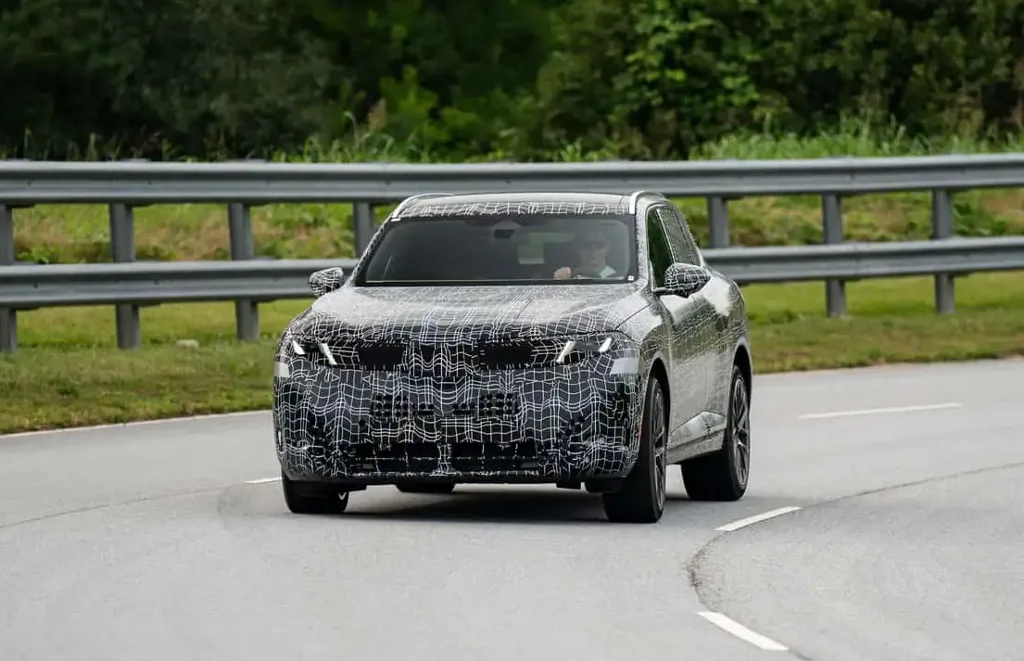
Technically, the iX5 will borrow important technologies from BMW’s new electric generation, even though it will not use the pure Neue Klasse platform of the iX3. Instead, it will sit on BMW’s CLAR architecture, a platform originally developed around combustion models and adapted for different powertrains. Even so, the iX5 will benefit from key Neue Klasse technologies, including sixth-generation cylindrical cells, an 800-volt electrical architecture and cell-to-pack construction. By eliminating intermediate modules, BMW can make better use of space, reduce structural weight and keep the floor height under control despite the huge battery.
The launch will be worth watching because the X5 will not be electric only. BMW also plans to offer mild-hybrid petrol and diesel versions, a plug-in hybrid and the first-ever hydrogen fuel-cell X5. That makes the new X5 something of a rolling catalogue of powertrain options, from electrified combustion to a long-range battery-electric SUV. But the iX5 will clearly be the headline act: huge, heavy, technologically ambitious and equipped with a battery pack that could make it one of the premium EV range leaders.