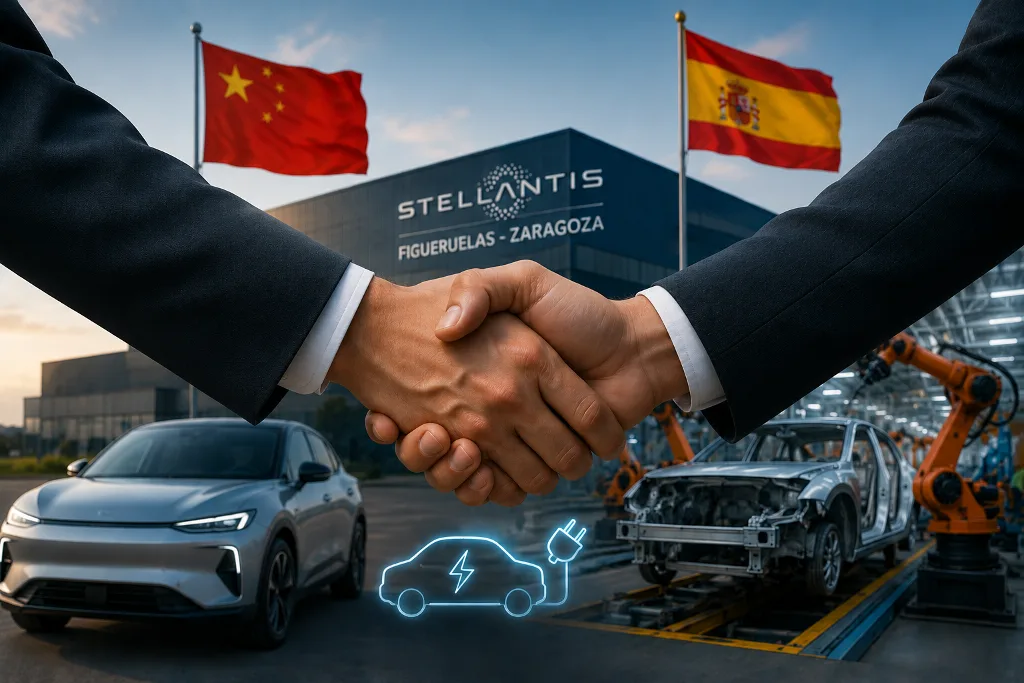
Leapmotor, one of China’s fastest-growing electric car manufacturers, wants to turn Spain into an important part of its European expansion. The company, in which Stellantis holds a 21% stake, has agreed with the group behind Peugeot, Fiat, Jeep and Opel to expand their industrial partnership and produce electric vehicles at the Figueruelas plant in Zaragoza. The plan includes building the Leapmotor B10 there, along with a new C-segment electric SUV from Opel, strengthening the role of the Spanish factory in the group’s new electric offensive.
The move has a very important industrial angle. For Leapmotor, producing in Spain means getting closer to European customers and reducing exposure to the tariffs applied by the European Union to electric cars made in China. According to the available information, Leapmotor electric cars sold directly from China are subject to an additional 20.7% tariff, on top of the standard 10% duty. Manufacturing inside the EU would improve price competitiveness and allow the brand to present its models with a label closer to “Made in Europe”.
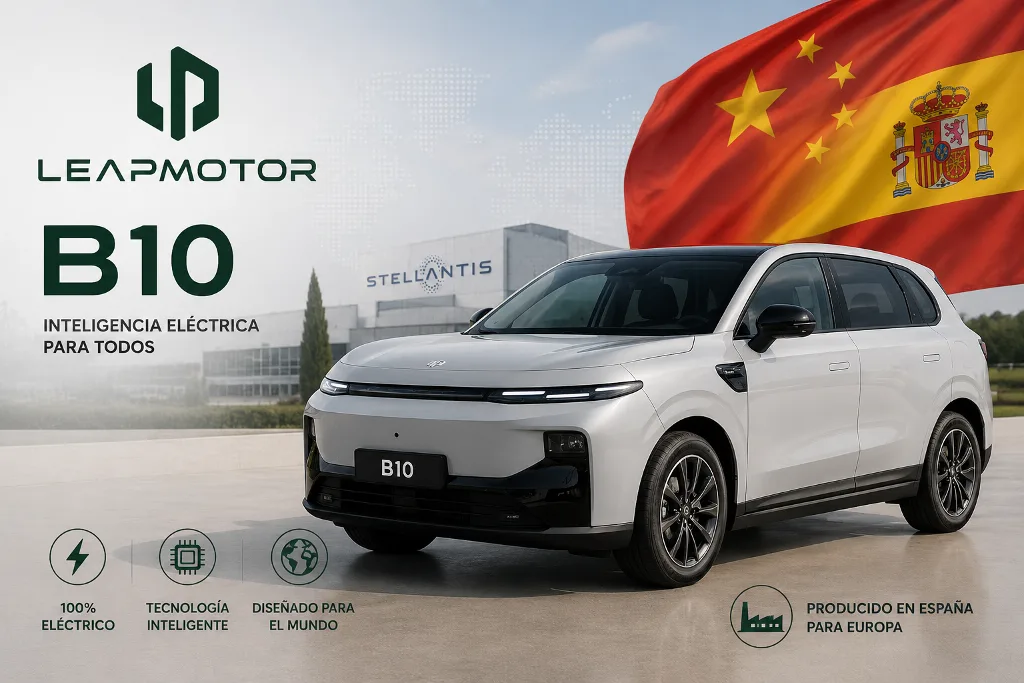
For Stellantis, the agreement also makes strategic sense. The European group gains access to Chinese electric vehicle technology, more competitive components and a supply chain capable of lowering costs at a time when selling affordable EVs has become a priority. Production of these models also helps maintain activity at key Spanish plants. Figueruelas already builds models such as the Opel Corsa, Peugeot 208 and Lancia Ypsilon, and the arrival of the B10 and the future Opel electric SUV further reinforces its role as an industrial centre for electrification.
The alliance between the two companies is not starting from scratch. Stellantis invested in Leapmotor in 2023, and both companies created Leapmotor International, a joint venture designed to boost sales of Chinese models outside China using the European group’s commercial and industrial resources. Leapmotor has also recently opened an R&D centre in Munich, with the aim of better adapting its products to the tastes and requirements of international customers. European production is therefore the next logical step: exporting alone is no longer enough, part of the manufacturing process now needs to be localised.
For European buyers, the result could be a new generation of cheaper and more competitive electric cars. For Spain, the news confirms something important: the transition to electric mobility is not only about sales, but also about attracting production, technology and industrial jobs.